
Source: Adobe Stock. Downing Street sign
In anticipation of the routine opening of the red box, here are five measures households can expect for Chancellor Rachel Reeves’ upcoming Autumn Budget.
-
A freeze on income tax thresholds
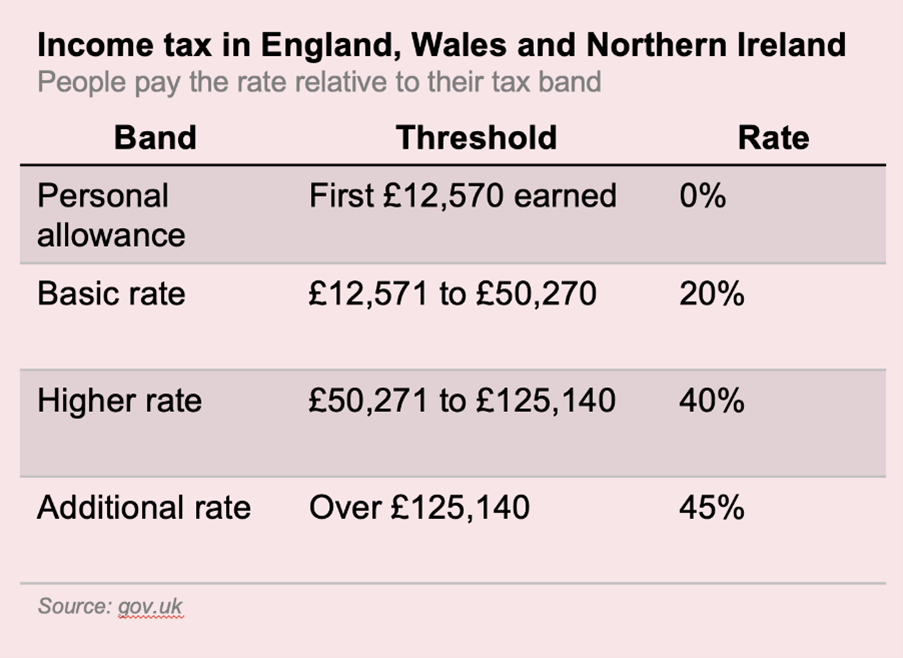
Source: gov.uk. Current UK tax bands
A move originally reported by the Financial Times, Reeves is expected to extend the freeze on income tax thresholds beyond the 2028-29 deadline. As wages increase with inflation, more people will be pulled into paying tax or adjacently pulled into higher tax brackets, allowing the Chancellor to increase tax revenues without a manifesto-breaking rise in headline rates.
- ISAs (Individual Savings Accounts)
The Chancellor is expected to cut the annual ISA allowance from £20,000 to around £12,000 in attempt to redirect investment towards the UK equity market. A lower threshold means ISA savers will be able house less of their earnings in tax-free accounts, affecting millions of ISA holders.
- Property
A planned “mansion tax” on properties valued over £2 million, which could affect around 100,000 households. Paula Higgins, CEO of the HomeOwners Alliance, warns that a mansion tax “hits ordinary family homes in London and the Southeast far more than the rest of the UK,” and that many affected homeowners are “asset-rich and income-poor,” making a sudden property tax difficult to assimilate.
- Pensions
Reeves is expected to raise £2-4bn by restricting salary-sacrifice pension contributions. Helen Morissey, Head of Retirement Analysis at Hargreaves Lansdown, cautions that capping NI-free contributions at £2,000 “could cause long-term damage to people’s pension prospects,” as employers may hold back on contributions and employees may be less inclined to contribute in excess of auto-enrolment minimums. Morrisey states that only 43 per cent of households are looking at a comfortable retirement and contends it is “counterintuitive” to remove saving incentives.
- Energy costs
Measures that could cut average bills by up to £200, including removing VAT on electricity and gas are being considered. Dhara Vyas, Chief Executive of Energy UK, says any policy changes made in the Budget must begin to remedy long-standing structural issues, claiming that while any assistance is welcome, “removing policy costs off electricity would be most effective,” saving nearly £200 for household using old electric heating and £75 for dual-fuel customers.
Comments