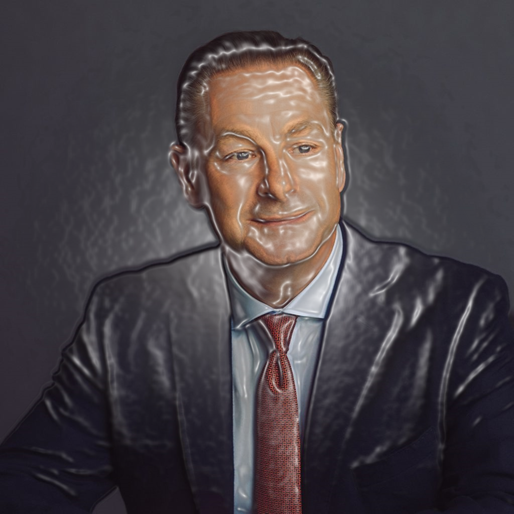
Source: Gleacher Shacklock. Edited by Tom Holliday. An image of Jan Sanders
Back in 2003, when Jan Sanders was appointed Global Head of Metals and Mining at HSBC, few were familiar with the deal-making landscape surrounding natural resources. An exclusive club, offering membership only to the well-established, larger banks. Today, not so much.
“At that point, it was really only us and J.P. Morgan doing it,” reminisced Sanders. “Since then, loads of banks have jumped on the bandwagon.”
Appointed in 2016 as a partner at the boutique advisory firm, Gleacher Shacklock, Sanders currently heads up their Metals and Mining division, sitting comfortably at the centre of a sector that has underpinned much of his career.
Recent transactions of the boutique bank include assisting the Blackstone, Global Infrastructure Partners and Cascade Investment consortium in their $6.7 billion private acquisition of Signature Aviation.
In the case of Mr Sanders, he most recently advised on Endeavour Mining’s $7.5 billion merger with Teranga Gold Corporation.
Speaking on Friday, the banking veteran sounded quite at ease with his partner position, making clear the benefits boutique employment.
“Now, nobody’s calling on my time internally. I spend my time where I want. I tend to spend about 75% of my time with my core relationships and about 25% on other things that I might consider interesting.”
When asked to define his leadership style as Head of Metals and Mining, Sanders responded: “I’m incredibly inclusive with my team – inclusive and supportive. I try to make sure they’re involved as much as possible”
“I’m also a bit of a nightmare when it comes to detail, which means we end up producing very high-quality work. Everyone knows they’ve got to get it right – there are no prizes for second best.”
Retrospectively, it was this affinity for collaborative detail that aided Mr Sanders in perhaps one of his more notable feats in an already illustrious career.
After leaving HSBC in 2010, Sanders took up with the French boutique Société Générale (Soc Gen) where he spear-headed the development of their comparatively small, Metals and Mining division.
Just short of a 6-year tenure at the French firm, Sanders took Soc Gen’s metals and mining business to number 1 in the EMEA (Europe, the Middle East, and Africa) zone as well as number 4 globally.
Representative deals include his advisory role over Mittal Steel’s $35 billion acquisition of Arcelor.
Now ArcelorMittal, the company possesses iron ore mining activities in Brazil, Bosnia, Canada, Liberia, Mexico, Ukraine, South Africa and India. The company is ranked 190th on the Fortune Global 500 and possesses a 15% market share in the production of steel.
Additional transactions include BHP’s (Broken Hill Proprietary Company) $174 billion ‘hostile’ offer for London originated mining firm, Rio Tinto and the $10 billion ‘take-private’ of ENRC (Eurasian Natural Resources Corporation), both of which Mr Sanders presided over.
Claiming to be propelled by a “degree of luck”, Sanders was critical of the support offered by the French firm.
“A lot of it was relationship driven – getting business from people I’d built up strong relationships with. And a lot of it happened despite the organisation, which was utterly chaotic” reported Sanders.
“That’s ultimately why I left – I felt we were achieving success despite the organisation, not because of it” he continued.
Once reminiscent of the “Wild West”, Sander’s continues to look fondly on the niche sector that has consumed so much of his career, but perhaps for different reasons.
“I do enjoy it” he stated.
“Right now, the setup is good. If I were back in an integrated [big] bank, I’d have retired earlier”, he continued.
Veiled with a layer of fondness and life-defining experiences, Sanders’ pragmatic approach to his career extends beyond the personal to the technical.
When asked about the place of metals and mining in a future dominated by resource conservation and ecological preservation, he had this to say.
“Mining itself isn’t the problem,” he said. “It’s the processing that carries most of the environmental cost. People are more realistic about that now.”
His pragmatism continued when asked about the influence of ESG and activist investments in the metals and mining space.
“I think that wave has crested and now receded,” he stated. “Three years ago, everyone was utterly paranoid about it. People are still extremely cautious about things like dam safety, especially after market incidents, but ESG intensity has eased” he elaborated.
A rhetoric reflective of a seasoned capitalist, prospects of Sanders retirement lay firmly on the horizon.
“The problem is, I’m 57 now. At some point you wonder how long you’ll keep going” he questioned. “Between you, me, and the gatepost, I’d be surprised if I’m still doing this in two years’ time.”
Comments