
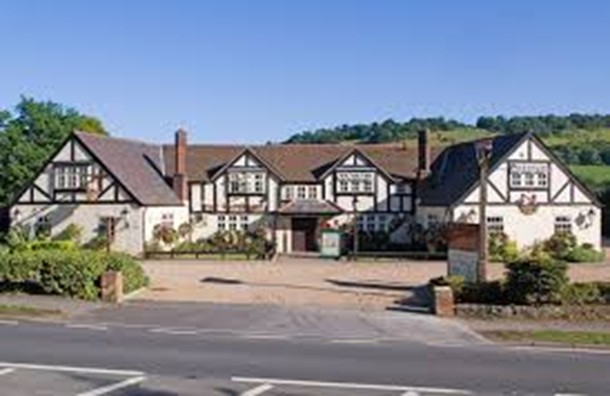
Source: Geograph. The Watermill Pub, Dorking, Surrey
Pubs in the South East face mounting pressure as sharp rises in rateable values coincide with higher wage and tax costs, prompting warnings from industry groups.
With what has been described as an “attack” on an already struggling sector, the recent Autumn Budget saw the introduction of “eye-watering increases” to rateable values as reported by UKHospitality.
Urging the Chancellor to “revisit” her proposals, the trade body have projected that the average pub will pay an extra £12,900 in business rates over the next three years. This represents a 76 per cent increase on the current number, as reported by the trade body.
The pressure of such an increase, whilst a unanimous issue for the already troubled sector, has been estimated to more greatly impact higher-volume pubs in the South East.
Neal Groves, Head of Tax at the chartered accountancy and business advisory firm Beavis Morgan highlighted that “a lot of pubs are now finding out the rateable value of their property is higher, resulting in a marked cost increase for many pubs, particularly in the Southeast”.
Despite business rates emerging as the most current threat, this represents one dimension of the financial squeeze.
In an interview with Ollie Maidment, Assistant General Manager at Crafted pub The Watermill Inn in Dorking, Surrey, the outlook was glum.
“Some of our brother and sister pubs in Crafted are in decline. We’re talking 20 per cent decline, which is generalised across the rest of the industry,” he stated.
Rising wage costs
“Obviously wages is our biggest concern just because of the increase,” he said, adding that “staffing has become a weekly puzzle”, with rising wage costs limiting the number of working hours employees can be issued.
“We’re already running as lean as we can,” he continued, stating that small increases to payroll now play a direct part in operational decision making.
Scheduled to increase by 4.1 per cent, the National Living Wage for people aged 21 and over will move up to £12.71 per hour in April 2026.
“This will trigger an automatic rise in payroll costs,” said Groves.
For a gastropub (a pub that serves high quality food) like The Watermill, the squeeze of the new National Living Wage does not stop there.
Highlighting the added pressures of manning a high-quality food service, Maidment said “if you want to deliver a decent kitchen, you need at least five of them in there… that’s the issue of premium.”
Recruitment difficulties
Recorded in a labour force survey conducted by the Office for National Statistics (ONS), the number of people employed on zero-hour contracts in the Accommodation and Food sector is 359,000, as of September 2025.
This is up from the beginning of the year, January 2025, at 338,000 people.
A promising opportunity for the average flexible worker, this growth trajectory is not shared amongst career pub workers.
“Ever since Brexit, that’s been an issue across the industry… finding decent staff in terms of those kitchen roles,” said Maidment.
“It’s impossible,” he continued. “We’ve been looking for two years to find a sous-chef.”
Of the 10-kitchen staff employed at The Watermill, only one [the Head Chef] is on a fixed salary.
Rising inventory costs
A prevailing critic of the Budget, Groves highlighted the absence of VAT relief and alcohol duty freezes in the Chancellor’s address. An omission which has left trade bodies in a state of concern.
Barry Watts, the Society of Independent Brewers and Associates (SIBA) Head of Public Affairs has expressed his concern, anticipating an increase in Draught Relief to 20 per cent “which ensures that beer can be sold in pubs at a lower rate of alcohol duty”.
According to the most recent ONS data, the average price of a UK pint stands at £4.77.
A statistic which has endured terminal increases since 1987, where the average pint cost only 93 pence.
Representing the upper bounds of pint prices, London’s draught lager lies slightly higher than the national average at £5.59 a pint, as reported by the pub trade publication The Morning Advertiser.
Personally, surveying a collection of four gastropubs in the local Surrey area, the price of draught lager appears to have edged past this £5.59 mark with the cheapest pint recorded at £5.80 and the most expensive recorded at £7.25 at The Watermill.
The Watermill’s draught lager prices increased by 25 pence in October, marking their second price increase this year.
“We have to remain profitable on top of all the duties” said Maidment
An approach which doesn’t appear to be compatible with the pub’s loyal flow regulars.
“You know, before, you went to the pub and you’re like, oh, three or four [pints], now I’ll have two or three,” said Kate Wharmby, a former Durham University student and pub regular.
“I can’t afford it… coming back here, the southeast is just different gravy,” she continued.
Reminiscing on her time in Durham, Wharmby highlighted the glaring disparities in pub prices. “I was in Durham at the start of November… I was genuinely shocked… it was eight pounds for two doubles [100 millilitres] and a pint,” she said.
In figures revealed by The Morning Advertiser in a survey of its readers, 2024 data shows the average price of a pint in the North East of England at £4.56.
This is £1.03 less than the average London pint. Furthermore, £1.24 less than the cheapest pint surveyed in the collection of Surrey gastropubs.
When asked for her reaction to the price differences, Wharmby said “it’s definitely gone up and I’ll definitely do it [drink] less often.”
What’s the outlook for gastropubs like The Watermill?
“7 per cent decline on this year is our target to reach,” said Maidment, indicating a potential worsening in trade conditions for the gastropub.
“It’s worrying,” he continued. “Half the money we make on Monday or Tuesday is gone straight away.”
Hope is not lost for the Surrey gastropub scene, however.
“Crafted in particular are in growth compared to the rest of the industry. We’re in 2 per cent growth across the board in premium” said Maidment, “with competitors not far behind.”
Comments